
On the morning of September 14, 2017, the U.S. Virgin Islands was in crisis. Hurricane Irma had struck just over a week earlier. Hurricane Maria was six days away.
In the middle of that chaos, Hannah Upp left the place she was staying on St. Thomas. She was supposed to go for an 8 am swim, and then to school, where she worked as a teacher.
She never arrived.
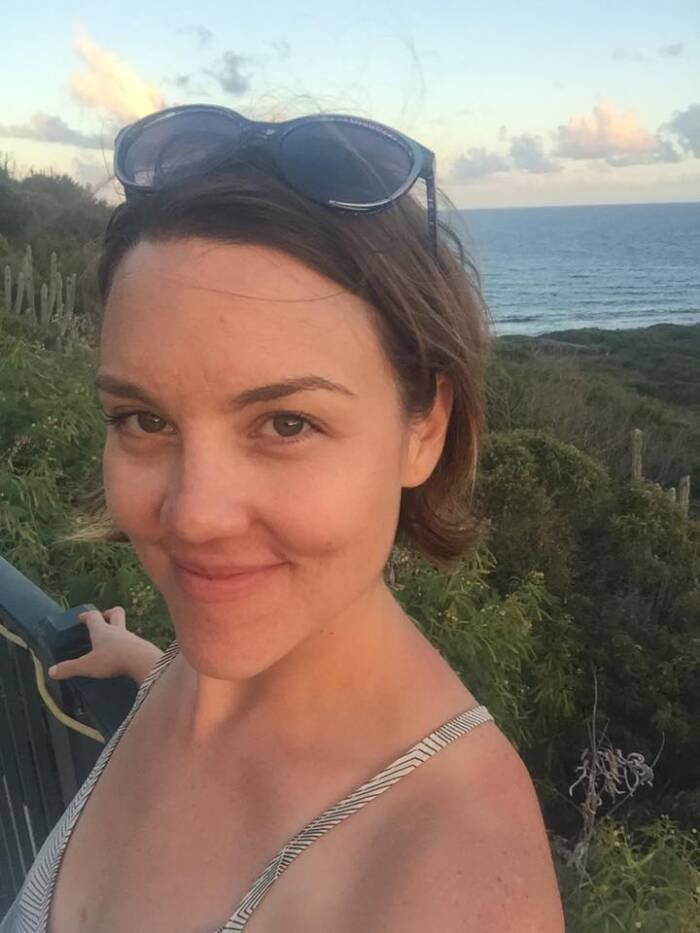
Her friends knew immediately that this was an emergency. Hannah had vanished before. Twice, in fact. Both times, she had eventually been found alive, but with little or no memory of where she had been.
It wasn’t long before searchers found her car near Sapphire Beach. Her purse, wallet, passport, and phone were still inside. Her sundress, sandals, and keys were found near the beach. But Hannah herself was gone.
Who Was Hannah Upp?
To understand why Hannah Upp’s friends leaped into action so quickly, we have to go back almost a decade.
Hannah was a Spanish teacher from Oregon, remembered by friends as bright, generous, trusting, idealistic, and deeply devoted to children.
According to The New Yorker, her friend described her as someone who “lives in this separate place where there are butterflies and birds, and they follow her around.”
She grew up in Japanese-American churches, where both her parents were pastors. Her mother spoke fluent Japanese.
As her father, David Upp, and her mother, Barbara Bellus, developed differing theological views, they divorced when Hannah was 15, with her father moving around the world and her mother staying in the U.S.
In 2008, she worked at Thurgood Marshall Academy, a public school in Harlem. Later, she taught at a Montessori school for underserved children in Kensington, Maryland, where she became deeply drawn to Montessori’s vision of education as a force for peace and human connection.
In 2014, Hannah moved to St. Thomas in the U.S. Virgin Islands to teach preschoolers at a Montessori school. There, she built a vibrant island life. She swam almost daily, danced, did Zumba, and formed close friendships.
By 2017, she had completed her Montessori degree and was beginning her fourth year on the island.
Two successive hurricanes were approaching, but Hannah didn’t evacuate. She believed school would provide a sense of normalcy for the children. That was who she was. Most of the time.
The First Disappearance: New York, 2008
Back in 2008, Hannah was 23 years old. She was preparing to start a teaching job at Thurgood Marshall Academy in Harlem. Just as the school year was beginning – on the very first day of the school year – she disappeared.
When her roommate checked Hannah’s bedroom, her purse was on the floor, and inside it were the things she would normally have taken with her: her wallet, passport, MetroCard, and cell phone.

The story soon appeared in the press. The New York Daily News ran the headline: ‘Teacher, 23, Disappears Into Thin Air. Before long, Hannah’s mother was asked to come to the Thirtieth Precinct to review Apple Store surveillance footage.
There, on the screen, was Hannah. She looked physically fine. She climbed the stairs in running clothes, brushed off a man who recognized her from news reports about the missing teacher, and logged into her own Gmail. But something was wrong. She stared at the screen for a moment, then walked away. And that was all.
Hannah seemed to be functioning – but not normally. She seemed to be moving through the city, but with no idea that anyone was searching for her.
Finding Hannah
After nearly three weeks, on September 16, 2008, Hannah was found alive. Barely.
The captain of a Staten Island ferry noticed someone in the water. Hannah was floating facedown in the Hudson River, around a mile off the southern tip of Manhattan, near Robbins Reef.
Two deckhands launched a rescue boat. Expecting her to be dead, one grabbed her ankles, while the other gripped her shoulders. But as they pulled her from the water, she took a deep gasp and began crying.
After being rescued, she was immediately treated for hypothermia, dehydration, and severe sunburn at Richmond University Medical Center on Staten Island. Suddenly, she could remember who she was and gave hospital staff her mother’s contact information.
The last thing Hannah remembered was going for a run in Riverside Park, near her apartment, on the day she disappeared. When her roommate came to visit, she told her, “I hope they release me soon, because I have to set up my classroom.”
Hannah clearly had no idea that school had started almost three weeks earlier.
In the middle of the night, with her mother sitting next to her, Hannah sat up and exclaimed, “I was at a lighthouse!” She then immediately fell back asleep. The next morning, she had no memory of her midnight realization, nor of the lighthouse.
She was then transferred to a psychiatric unit at Columbia University Medical Center.
The Diagnosis
After Hannah was rescued in 2008, doctors looked for an explanation. Brain scans didn’t reveal a clear neurological cause. With no clear neurological cause, she was diagnosed with dissociative fugue, a rare form of dissociative amnesia.
Dissociative fugue is often linked to psychological trauma, but that only deepened the mystery. Hannah herself said she had not experienced any severe trauma that might obviously explain what had happened to her.
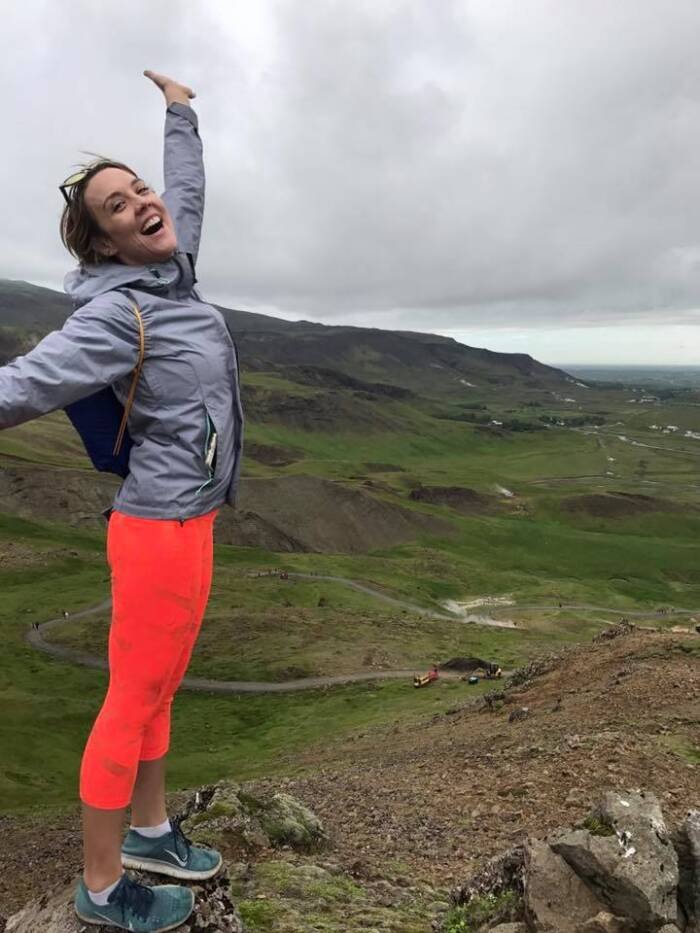
Hannah had not simply run away. She had not knowingly staged a disappearance. She appeared to have lost contact with her own identity while still being physically active. She had no meaningful memory of the days she had been missing.
As far as anyone knew, the 2008 episode could have remained a terrifying one-off. Hannah went back to life. She kept teaching.
But years later, the same pattern would return.
How Did Hannah End Up in the Water?
Hannah couldn’t remember anything, but over the coming weeks, she and her friends, family, and doctors began piecing things together.
Hannah vaguely remembered going to a Japanese floating lantern ceremony on Pier 40 on September 11, which may have resonated with memories of the annual Obon festival she had danced in as a child.
Her family later concluded that, three days later, she returned to the pier and entered the water. She likely spent the night in the river and, at some point, held onto the side of a barge. After realizing she was being sucked toward the propeller, she pushed off and swam away.
At some point, she was likely swept up on Robbins Reef, scraping her knees on the rocks. She slept there for the day – where she got that intense sunburn on her left side – before re-entering the water.
One of the most troubling questions for her family was that Hannah didn’t seem to have adopted a new identity when she was in her fugue. She seemed to have no identity at all – other than a love of water.
The Second Disappearance: Maryland, 2013
In 2013, Hannah, now 28, was working at a Montessori school in Maryland. Once again, it was the first day of a new school year. Once again, she vanished.
Police called Barbara and told her they had found Hannah’s purse, wallet, and cell phone on a wooded Kensington footpath.
A colleague later remembered seeing Hannah that morning while driving to school. Hannah was walking quickly – but in the wrong direction.
This time, Hannah broke from her fugue much faster. The next day, at 10:30 pm, she called her mother from a borrowed phone. She remembered going to Wheaton Plaza for lunch, but she didn’t remember what happened after that.
When she came to, she had found herself still in the Wheaton-Glenmont area, in a dirty creek, with a shopping cart beside her.
Although everything had worked out okay, the Maryland episode reinforced the fear that Hannah’s fugues were not isolated. They could return. And they seemed to happen when she was under pressure or entering a period of transition.
And, chillingly, she had again been found in or near water.
A New Life in St. Thomas
By 2017, Hannah had built a new life in St. Thomas. She was teaching at the Virgin Islands Montessori School and had become part of the island community.
She also loved swimming. She swam frequently and had become strong enough to reach small cays offshore. Then Hurricane Irma hit on September 6, 2017. St. Thomas was devastated.
Communication was difficult. Roads, buildings, and basic services were disrupted. Hannah survived the storm, sheltering with friends in the laundry room of her apartment building, and stayed in contact with people afterward.
But those around her noticed signs that something might be wrong. In the days before she vanished, friends and colleagues described her as seeming unusually detached or unlike herself.
In any other setting, those signs might have seemed small. In Hannah’s case, they were terrifying.
Sapphire Beach and the Broken Trail
When Hannah failed to appear at school on September 14, her friends began searching. She had chatted to an ex-boyfriend who was evacuating the island for several hours, and briefly considered going with him. But she hadn’t.
Her friends knew her history, and they knew how much water mattered to her. And so, their search led them straight to Sapphire Beach, one of Hannah’s favorite places to snorkel.
There, they found her car in the parking lot. Her purse, wallet, phone, and passport had been left inside. Her sundress, sandals, and car keys were found at a small bar.
It seemed that she had gone toward the water, probably to swim. But whether she entered the water knowingly, while disoriented, or as part of another fugue episode is not known.
The timing could hardly have been worse. St. Thomas was still recovering from Irma, and Maria would reach the region within days.
Search efforts were launched, including by friends, local responders, and the Coast Guard, but the weather and disaster conditions made everything much harder. They came up empty-handed – and had to stop when Maria approached.
The Searches After the Hurricanes
Searchers checked beaches, shorelines, nearby islands, evacuation routes, hospitals, shelters, marinas, and other possible locations. Friends looked by boat. Authorities and volunteers followed possible sightings.
Her family later raised money for continued private investigation, saying that official and volunteer search resources had been exhausted. One possibility was that Hannah had drowned after entering the water.
Another was that she had survived and reached another part of the island or another island entirely. Because St. Thomas was in post-hurricane chaos, some wondered whether she could have boarded an evacuation vessel or moved among displaced people without knowing who she was.
But no confirmed sighting or record has resolved the case.
The most haunting part is that Hannah had survived impossible situations before. For her family and friends, that kept their hopes alive, but it also made the absence of answers harder to accept.
What Happened to Hannah Upp?
Nobody knows. However, it seems likely that she entered another dissociative fugue around September 14, 2017. It was, again, the start of a school year. The hurricanes added extra pressure. She abandoned her belongings and displayed unusual behavior beforehand.
And it seems that, once again, she gravitated toward water.
Sadly, the similarities to 2008 are plentiful. The tragic yet probable outcome is that she entered the ocean and drowned, especially given the dangerous conditions around St. Thomas after Hurricane Irma and before Hurricane Maria.
But her death cannot be stated as fact. Her body has never been found. There is no confirmed evidence that she died, no confirmed evidence that she left the island, and no confirmed evidence of foul play. Her mother, who moved to St. Thomas, continues to hold out hope.
She is, officially, still listed as an endangered missing person, and one of five people still missing in the Virgin Islands in the wake of the storms, by most counts in 2018.
According to The New Yorker, Hannah’s mother, Barbara, feels it’s important to let Hannah’s disappearance “stay a mystery.”
Only with such unanswered questions might we get a better understanding of dissociative fugues and develop ways to prevent the same thing from happening to others.
Sources
https://charleyproject.org/case/hannah-emily-upp
https://www.newyorker.com/magazine/2018/04/02/how-a-young-woman-lost-her-identity
https://dcist.com/story/13/09/04/police-seeking-missing-kensington-w
https://www.nydailynews.com/new-york/teacher-23-disappears-thin-air-article-1.322586



Leave a comment