
In July 2007, Army Private First Class LaVena Johnson was found in a burning tent on a U.S. Military base in Balad, Iraq. Her death was quickly ruled a suicide by the Army Criminal Investigation Command.
However, her family sensed that something was wrong from the very beginning. What followed were years of struggle for the Johnson family to uncover the true circumstances surrounding LaVena’s death.
Background
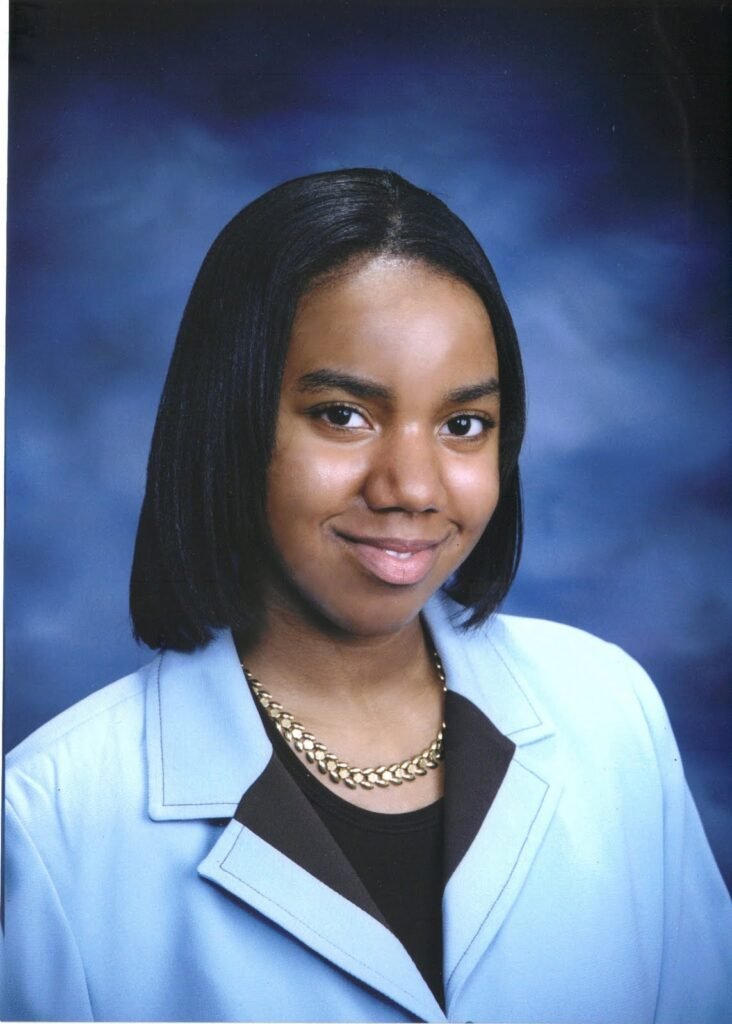
LaVena Lynn Johnson was born on July 27th, 1985, in Florissant, Missouri, to parents John and Linda. She grew up in a large family with three older brothers and one younger sister. From a young age, LaVena adored music and began playing the violin when she was in elementary school.
At just eleven years old, LaVena made a decision to become a vegetarian because she loved animals and couldn’t bear the thought of eating them. LaVena’s compassion was endless, and she regularly donated her unused clothes and volunteered at homeless shelters.
Her high school teachers remember LaVena as a dedicated student who excelled academically. She was a member of the school orchestra and had dreams of becoming a movie producer one day.
But in May 2004, just days after graduating from Hazelwood Central High School, LaVena surprised her parents by informing them she wanted to enlist in the Army.
Like many young people in the United States, LaVena was deeply affected by the September 11th Attacks and felt a strong desire to serve her country.
Additionally, she was aware that army veterans received federal benefits like the GI Bill and Military Tuition Assistance, which would help her pay for her college later on.
Her plan was to enlist, serve in the Army for a time, and then attend a college in California. This would bring her closer to her dream of working and living in Hollywood.
Her father, John Johnson, was apprehensive because he himself had served in the Army. However, John also attended college after his service ended, eventually earning a doctorate in psychology, so his daughter was only following in his footsteps.
Deployment to Iraq
Even though her parents were against it, LaVena officially enlisted in the Army on September 15th, 2004. She completed her basic training at Fort Campbell in Kentucky and briefly visited her family before being deployed to Iraq in May 2006.
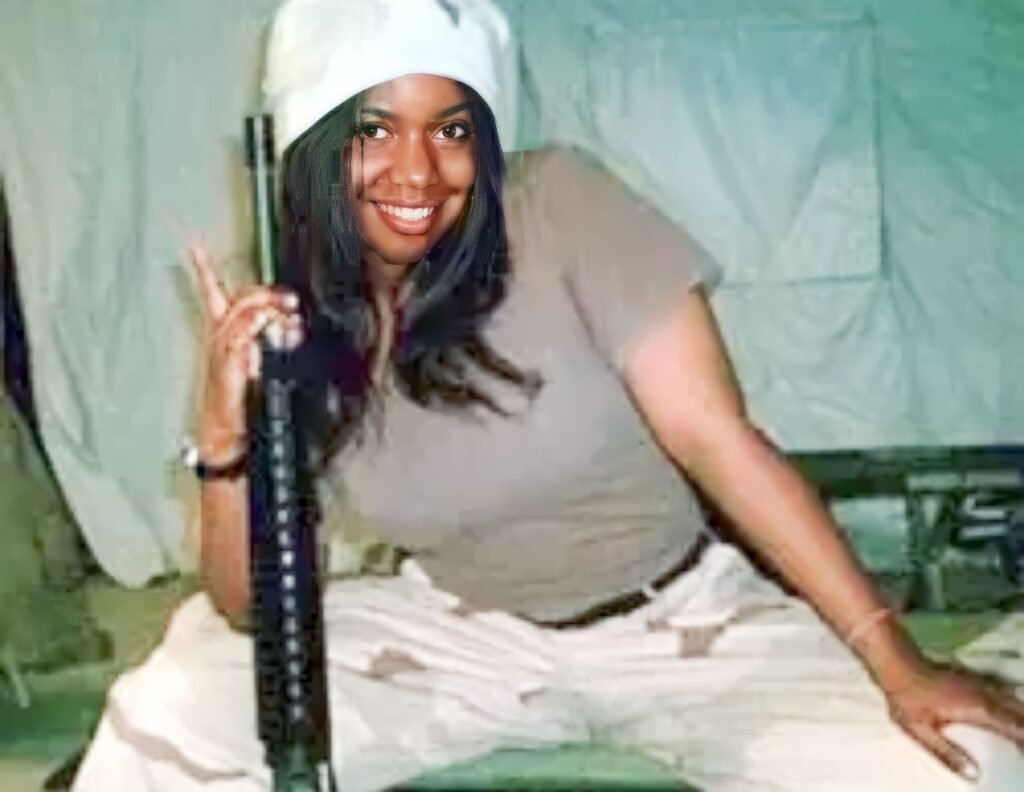
LaVena’s unit, the 129th Corps Support Battalion, was stationed at an Army base in Balad, about 50 miles north of Baghdad. There, LaVena worked at the Communication Center. She regularly wrote to her family, sharing stories about the intense training in hot weather and her visits to military church services.
On July 17th, 2005, LaVena called her parents to inform them that her unit would return to the United States in the next three to four months.
She sounded excited because this meant she would be able to spend the Christmas holidays with them. LaVena asked her dad not to decorate the Christmas tree without her, as it was her favorite family tradition, and she didn’t want to miss it.
LaVena’s death
On July 19th, 2005, a doorbell rang at the Johnson’s family home in Missouri. It was 7:30 AM, and Linda got up to see who was at the door.
She peered through the window and saw a soldier standing on the porch. A wave of sickness washed over her as she realized what that meant, so she went upstairs to get John, who opened the front door.
The soldier informed the Johnson family that their 19-year-old daughter, LaVena, had died of a self-inflicted non-combat injury. John was in shock because that implied LaVena had ended her own life, which didn’t make any sense to him.
They were told she had used her M16 rifle to take her own life. Allegedly, LaVenahad put the barrel of the rifle in her mouth, and the bullet exited through her left frontal lobe.
Within a week, LaVena’s body was brought back to the United States, and her family held a funeral just one day after what would’ve been LaVena’s twentieth birthday.
John, Linda, and LaVena’s siblings were allowed to see her before the burial, and they were all shocked to find that she had bruises and scratches all over her face, as well as a broken nose.
At that time, John was working as a military psychologist, and one of his patients had also committed suicide with an M16 rifle, similar to LaVena. John had seen his body and knew what a gunshot wound to the head with such a powerful weapon would look like.
However, the exit wound on LaVena’s head was smaller than he had expected. According to John, it looked more like it had been made by a handgun.
LaVena was dressed in her military uniform, and when John attempted to remove her gloves, they wouldn’t come off. It appeared as though the gloves were glued to her hands. When he finally managed to take them off, he noticed more bruises that resembled burns.
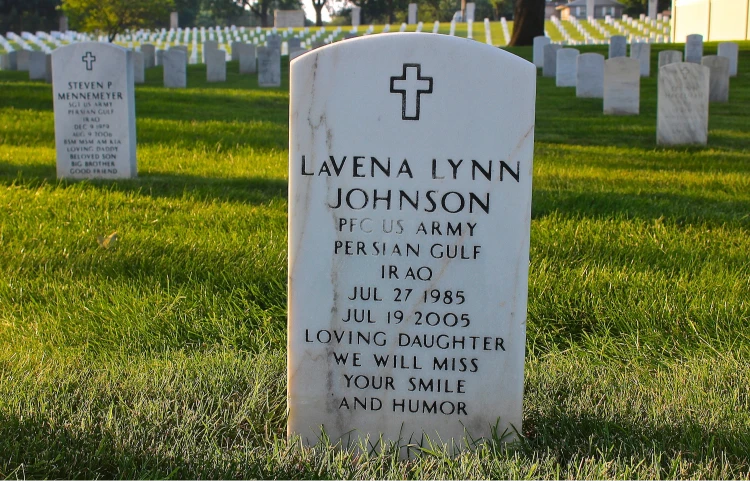
None of this made any sense to John, but he kept his concerns to himself for the time being, choosing to wait until after the funeral to begin asking questions. LaVena Johnson was buried at the Jefferson Barracks National Cemetery in St. Louis County.
What really happened to LaVena?
LaVena’s funeral raised more questions than answers for her family. Her father, John, contacted the military to seek more information about her death. The Johnsons haven’t yet received the autopsy report, and John wanted to read the official explanation for the facial injuries observed prior to LaVena’s burial.
A military liaison reached out to John, explaining there was some sort of mix-up with files regarding LaVena’s death.
The Johnsons finally received the autopsy report in mid-September 2005 and were shocked by the lack of detail included in the document. Her death was officially ruled a suicide, but the family found it odd that she hadn’t left a note.
The Johnsons requested to see the photographs of the scene and all the documents related to LaVena’s death, but the army denied them access. After months of legal battles, they finally received the requested documents in January 2007.
The documents revealed that on the day of her alleged suicide, LaVena had worked at the Communications Center until 5:00 PM. She then returned to her barracks to get ready for physical training, which was something she did daily.
At 6:30 PM, two of LaVena’s friends, who usually trained with her, came to the barracks to pick her up, but no one answered the door. The investigation found that LaVena had missed her physical training to spend some time with a male soldier.
She had recently ended a two-month relationship via email and was still heartbroken. The two were seen at the base grocery store before he walked her back to her barracks.
According to the report, LaVena left her barracks around 11:45 PM and walked across the base to a contractor’s tent.
She took her M16 rifle with her and brought printed emails from her ex-boyfriend, which she set on fire. LaVena then placed the barrel of the rifle in her mouth and pulled the trigger with her right hand.
Around 1:20 AM, several people heard the gunshot and approached the tent. They saw two smaller fires inside and a body on the ground next to a rifle. After attempting to move the body outside, military personnel decided to deal with the fire first by dumping sand and dirt on it.
They managed to extinguish the flames, and then the investigators were left with an already compromised scene. The breakup emails discovered in the tent suggested LaVena was depressed and had made a decision to take her own life.
Investigators interviewed the male soldier who spent the evening with LaVena, as well as his roommate. Both confirmed that she seemed like her cheerful self.
Nothing seemed suspicious, and she appeared to be happy. According to the roommate, the male soldier returned after walking LaVena back to her barracks and went straight to bed.
However, one of LaVena’s closest army friends did share with the investigators that LaVena was upset after discovering she contracted a STI from her ex-boyfriend. Following the breakup, she learned her ex had already moved on, and shared with her friend that she hated her life.
Her friend also mentioned that LaVena’s doctor advised her to get tested for AIDS, which made her more upset.
But probably the most significant detail was a conversation the two had months before LaVena’s alleged suicide. When asked if she would ever consider suicide, LaVena said no, explaining that she wouldn’t want to hurt her family.
Potential evidence of a crime
During the investigation, LaVena’s hands were tested for gunshot residue, and the results were unexpected. The number of particles found was surprisingly low, suggesting that she didn’t handle the rifle herself.
Of course, activities such as washing her hands could have decreased the amount. There is also a possibility that military personnel who attempted to pull LaVena out of the tent grabbed her hands and removed the gunshot residue.
Another confusing detail found in the report was the absence of fingerprints on the rifle itself. Furthermore, the M16 rifle found in the tent wasn’t assigned to LaVena, as the investigation revealed that the weapon had a different serial number.
As previously mentioned, LaVena’s father was puzzled by the size of the gunshot wound observed on his daughter. He firmly believes that she was killed with a smaller caliber weapon. While a shell casing from an M16 rifle was found near LaVena’sleg, the bullet itself was never recovered.
After reviewing photos of LaVena’s body, her family noticed something alarming. LaVena appeared to have burns all over her torso and legs, particularly in the genital area. Although she allegedly set the printed emails on fire, her clothes weren’t burned, only her skin.
This raised suspicions that someone may have tried to cover up a potential rape by destroying DNA evidence and then redressing LaVena before setting the tent on fire. Shockingly, the autopsy report failed to mention these bruises, and a sexual assault exam was never performed.
The Johnson family questioned how LaVena could’ve committed suicide using the M16 rifle, considering her stature and arm length. Furthermore, there were reports of bloody footprints discovered outside the tent that were never explained by the Army.
Aftermath
The Army Criminal Investigation Command officially closed the case and ruled LaVena’s death a suicide. Despite the efforts by the Johnson family, the investigation was never reopened. Many people believe that the forensic inconsistencies point to an Army cover-up involving a sexual assault and murder.
LaVena’s father, John, is convinced that if his daughter had truly taken her own life, she would’ve left a note.
The circumstances surrounding the death of LaVena Johnson remain a mystery to this day, and her family is still hoping someone will come forward with the answers.
Sources
https://www.npr.org/2008/08/11/93493468/soldiers-family-challenges-army-suicide-report
https://www.latimes.com/archives/la-xpm-2009-mar-08-na-women-soldier-suicides8-story.html
https://thefallen.militarytimes.com/army-pvt-lavena-l-johnson/986268


Leave a comment