
Decades before the Lindbergh kidnapping gripped the nation in 1932, another missing-child case received significant media coverage.
In August 1912, four-year-old Bobby Dunbar vanished during a family fishing trip to Swayze Lake in Louisiana.
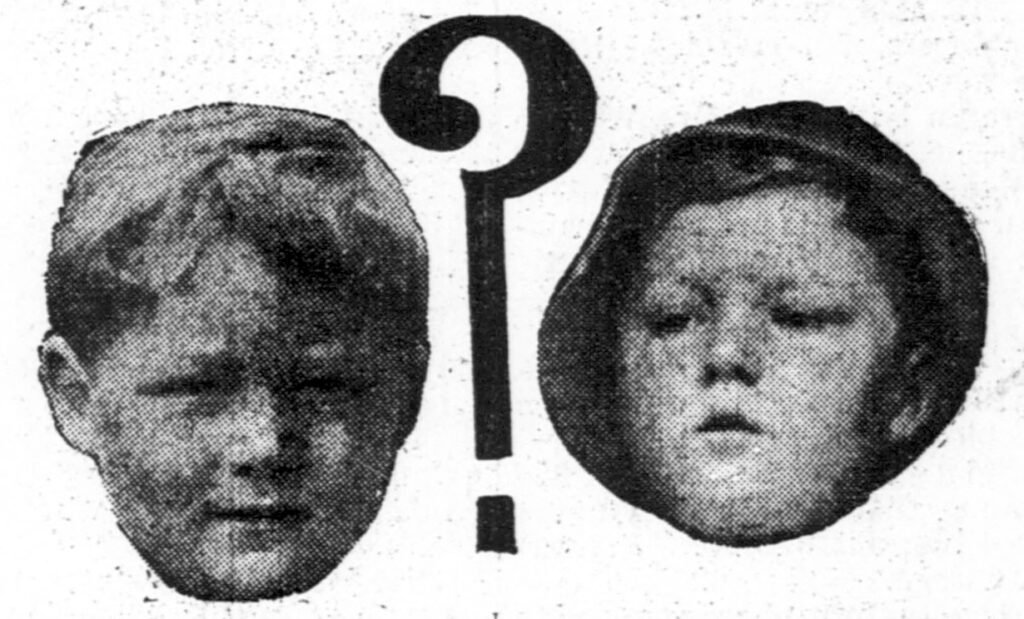
Months later, a boy matching Bobby’s description was found in Mississippi in the company of a traveling handyman.
He was reunited with the Dunbar family, and the story had a happy ending, which the public was praying for. But decades later, the truth was finally exposed.
The disappearance
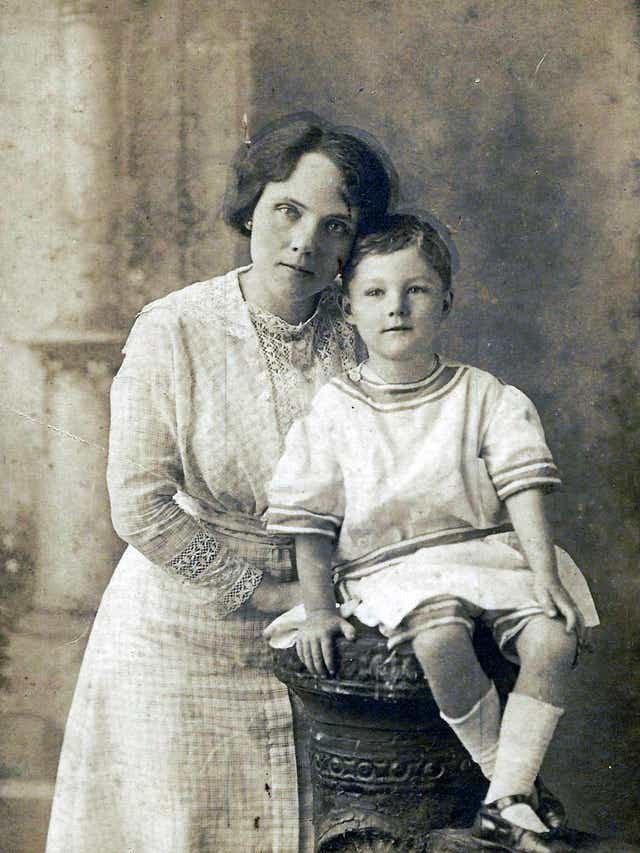
Robert Clarence Dunbar, also known as Bobby, was born on May 23rd, 1908, to parents Lessie and Percy Dunbar. The family lived in Opelousas, Louisiana, and often went on fishing trips to the nearby Swayze Lake.
The area surrounding the lake was heavily wooded and swampy in places, so the children loved to play and explore during these family outings.
On August 23rd, 1912, the Dunbar family was at the lake with a group of relatives and friends. Percy Dunbar had to go to Opelousas for work, and 4-year-old Bobby was sad his dad would be gone for the day.
Lessie Dunbar was preparing lunch for everyone when Bobby asked her if he could go to the lake with the other boys to fish. His mom said yes, and Bobby left with a group of children, including his brother Alonzo.
Hours later, the group returned to the campsite, but Bobby wasn’t with them. Thinking he was nearby, Lessie began calling for him, but he was nowhere to be found.
Several family friends suggested that Bobby might be waiting for his dad on the wagon trail, but when they searched the area, they only found Percy Dunbar on his way back from work.
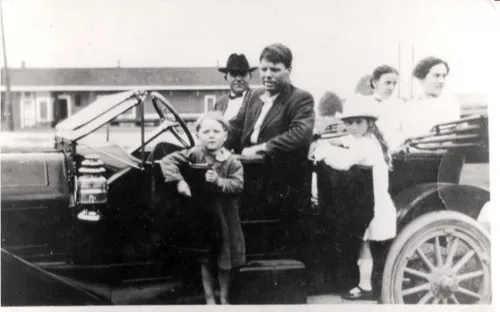
Upon learning that his son was missing, Percy rushed to the campsite where Lessie was anxiously waiting for the group to return. As time passed, the adults shifted their search to the lake, but no trace of Bobby was found.
Some began to theorize that the boy might have been attacked by a wild animal, specifically an alligator, which were known to inhabit the area.
By the following day, around 500 people had gathered at Swayze Lake to assist in the search for Bobby. The Dunbar family eventually returned home to Opelousas, leaving behind a few family friends to help the searchers.
The search party discovered a single set of footprints leading to a nearby railroad bridge, which fueled the theory that Bobby might’ve been kidnapped.
The search for Bobby
On August 26th, 1912, Percy Dunbar traveled to New Orleans to report his son’s disappearance to the local police department. He then spoke with several reporters who agreed to publish Bobby’s physical description in the newspapers.
Believing that their 4-year-old had been kidnapped, the Dunbars hired a detective agency that created postcards featuring Bobby’s picture and description. These were distributed to officials in various towns and cities across Louisiana, as well as the neighboring states.
The residents of Opelousas came together to raise $1,000 as a reward for any information regarding Bobby’s whereabouts. It was a significant amount of money for the 1910s, but no useful leads emerged despite the reward being increased to $6,000.
Everything changed in April 1913 when law enforcement was contacted by someone from Hub, Mississippi, saying that a boy resembling Bobby Dunbar was seen with a traveling handyman named William Cantrell Walters.
William was quickly located and taken into custody. He explained that the boy was Charles Bruce Anderson, the son of Julia Anderson, who worked for the Walters family.
According to William, Julia had allowed him to travel with Bruce. Convinced that William was lying, authorities contacted the Dunbar family, asking them to come to Mississippi to identify their son.
There are different accounts of what happened when Lessie, Bobby’s mother, saw the boy. One version of the story is that the boy woke up and cried out, “Mother!” Another suggests that the little boy cried out of fear as Lessie stepped back, stating she wasn’t sure he was Bobby.
Hesitantly, Lessie began examining the boy for birthmarks and checked his feet because Bobby had a scar on his left big toe.
Soon, she confirmed that the boy was indeed her son, leading a judge to allow the Dunbars to take him back home to Louisiana. Subsequently, William Cantrell Walters was arrested and charged with kidnapping.
Bobby comes home
When the residents of Opelousas learned that little Bobby Dunbar had been found, they organized a parade to celebrate the good news. But when some of them discovered that Lessie failed to recognize him right away, they began questioning whether Bobby was truly back.
Weeks later, Julia Anderson arrived from North Carolina to prove the Dunbars had taken her son, Bruce. Local law enforcement didn’t believe her but agreed to conduct a lineup with five boys, including Bruce. Julia failed to recognize her son.
She convinced the authorities to give her a second chance the following day, and this time, she successfully picked out Bruce from the lineup.
Regardless, people remained sceptical of Julia’s story. Since she didn’t have the money to take Dunbars to court, she returned to North Carolina alone.
In 1914, William Walters was found guilty of kidnapping, even though multiple residents of Poplarville, Mississippi, came forward confirming he had been traveling with the boy before Bobby Dunbar’s disappearance.
Julia Anderson attended the trial and testified for the defense. She became friends with the people from Poplarville and decided to move there following the trial.
The close-knit community welcomed her with open arms, and Julia found solace in her Christian faith. She eventually got married and had seven children, who later recalled that their mother talked about Brice frequently, accusing the Dunbar family of kidnapping him. Julia passed away on February 1st, 1940.
After a successful appeal, William Walters’ conviction was overturned by the Louisiana Supreme Court. He was released from prison in 1916 and was granted the right to a new trial.
However, prosecutors decided to drop the case due to the costs involved. William continued to work as a traveling handyman until his death in April 1945.
Despite everything that happened, the Dunbar family raised the boy as their own. When he grew up, Bobby remained in Opelousas, where he lived with his wife and four children and ran a local gas station. He died on March 8th, 1966.
The real identity
The kidnapping and eventual return of Bobby wasn’t exactly a family secret, but it was rarely discussed among the family members. It became a part of the Dunbar family lore, and pretty much everyone knew a little about it.
More than three decades after Bobby Dunbar’s death, Margaret Dunbar Cutright, his granddaughter, wanted to determine if the boy found in Mississippi was indeed a member of the Dunbar family.
Margaret began her own investigation in 1999 when her father, Bob Dunbar Jr., gave her a scrapbook containing articles and photos related to the kidnapping. That was enough for Margaret to continue collecting more newspaper articles and tracking down the children of Julia Anderson.
Her research ultimately led her to the family of William Cantwell Walters, who provided her with the trial documents from the kidnapping case. While talking to Julia’s children, Margaret learned that her grandfather had visited Poplarville a couple of times and had spoken to his siblings.
His half-brother, Hollis, vividly remembered meeting Bobby from Opelousas in 1944, and the two had a brief conversation.
Even though some family members were against Margaret’s quest for the truth, her dad, Bob Jr., was supportive from the very beginning.
In 2004, a reporter from the Associated Press reached out to the family regarding the story of Bobby Dunbar’s kidnapping and mentioned the possibility of conducting a DNA test.
Margaret and Bob Jr. talked to David Dunbar, Alonzo’s son, who agreed to do a DNA test. Within weeks, the family discovered that Bob Jr. wasn’t related to David. Julia Anderson’s descendants were thrilled by this revelation and were very welcoming to Margaret and her dad.
What happened in 1912?
When the results finally revealed that Bobby was very likely Bruce Anderson, another question arose: What happened to the real Bobby?
Considering that the only clue found during the search of the Swayze lake in 1912 was a set of small footprints leading to the railroad bridge, the most plausible theory was that Bobby fell into the water and drowned.
Since his body was never recovered, it is possible that he was eaten by an alligator. An animal attack could have concealed all the evidence that the boy was ever in Swayze Lake. So why was Lessie Dunbar convinced that Bruce Anderson was her missing son?
After Bobby’s disappearance, Lessie was in a state of complete shock. She needed something to hold onto, and reuniting her family may have seemed like the only option at the time.
However, she probably knew deep down that the boy from Mississippi wasn’t her son. Lessie filed for divorce from Percy Dunbar in 1920 and moved to New Orleans, where she essentially had a fresh start.
The lives of multiple people were changed in August 1912, but the mystery was finally solved nearly a century later thanks to DNA technology.
Sources
https://countryroadsmagazine.com/art-and-culture/history/the-strange-case-of-bobby-dunbar
https://allthatsinteresting.com/bobby-dunbar
https://www.ranker.com/list/what-happened-to-bobby-dunbar/genevieve-carlton
https://www.themirror.com/news/us-news/unsolved-case-missing-louisiana-4-970709






Leave a comment