
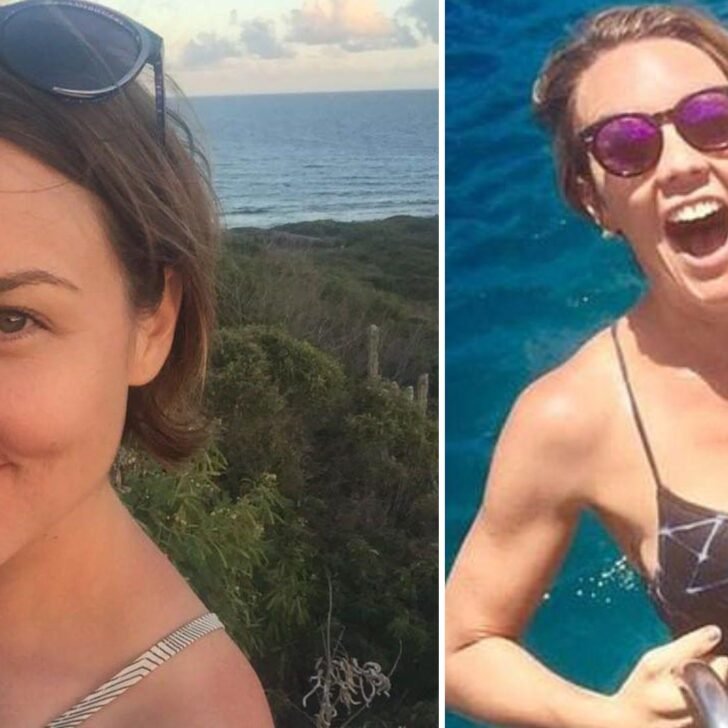
In October 2015, 21-year-old Dutch medical student, Sophia Koetsier, traveled through Uganda after completing her internship at a hospital in Kampala.
After enjoying a fun morning at the Murchison Falls National Park, she returned to the Student Education Center in Paraa, where she was supposed to spend the night.
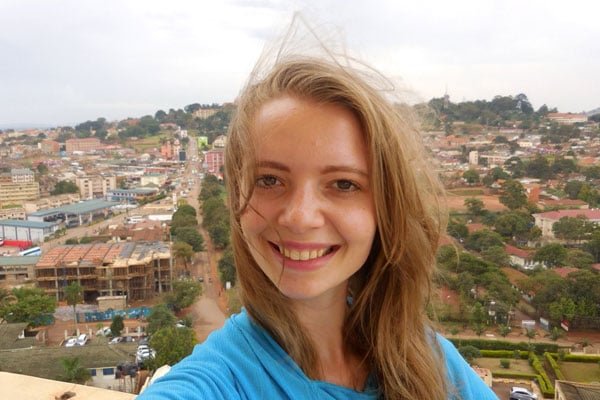
Within hours, the student mysteriously disappeared after going to the restroom. A large-scale search by park rangers, local law enforcement, and Dutch police officers failed to locate the missing young woman.
However, some of Sophia’s personal belongings were found on the banks of the Nile, initiating a decade-long quest by her family to uncover what really happened to her.
Background
Born on December 7th, 1993, in Amsterdam, Netherlands, Sophia Koetsier is the eldest of three children born to Gerard Koetsier and Marije Slijkerman.
From a young age, Sophia has been cheerful, outgoing, social, and very creative. Making friends came easily to her, and she spent her free time writing, dancing, playing sports, and playing piano.
Even though she dreamed of becoming an actress, Sophia decided to enroll at the University of Amsterdam to study medicine. By 2015, she earned her Bachelor’s degree and decided to take a gap year before starting her Master’s program.
As a member of AIESEC, a youth-run non-profit organization, Sophia secured an eight-week internship at the Lubaga Hospital in Kampala, Uganda.
The internship
Sophia arrived in Uganda on September 1st, 2015, and moved into her temporary accommodation, which she shared with two other Dutch students.
Eager to learn, Sophia was never late for her internship at the hospital, where she assisted during surgeries and spent weeks at the maternity ward, delivering babies.
Of course, Sophia stayed in touch with her family back in the Netherlands and wrote them lengthy e-mails describing her daily adventures. She often mentioned how fascinating Uganda is and her desire to learn as much as possible about its culture.
On October 13th, 2015, Sophia’s mother traveled to Uganda, where she planned to stay until November 3rd. The two met a few times in Kampala, and Marije had the opportunity to see Sophia working at the hospital.
After completing her eight-week internship on October 22nd, 2015, Sophia said goodbye to both the staff and patients at the maternity ward. Since her goal was to become a doctor specializing in tropical medicine, she hoped to return to Africa shortly after finishing her studies.
Exploring Uganda
Before traveling back to the Netherlands, Sophia and her two friends booked a tour with Ugandan tour guide, Michael Kijjambu. The four of them began their multi-day safari on October 23rd, during which the guide planned to stop at some of Uganda’s most beautiful national parks.
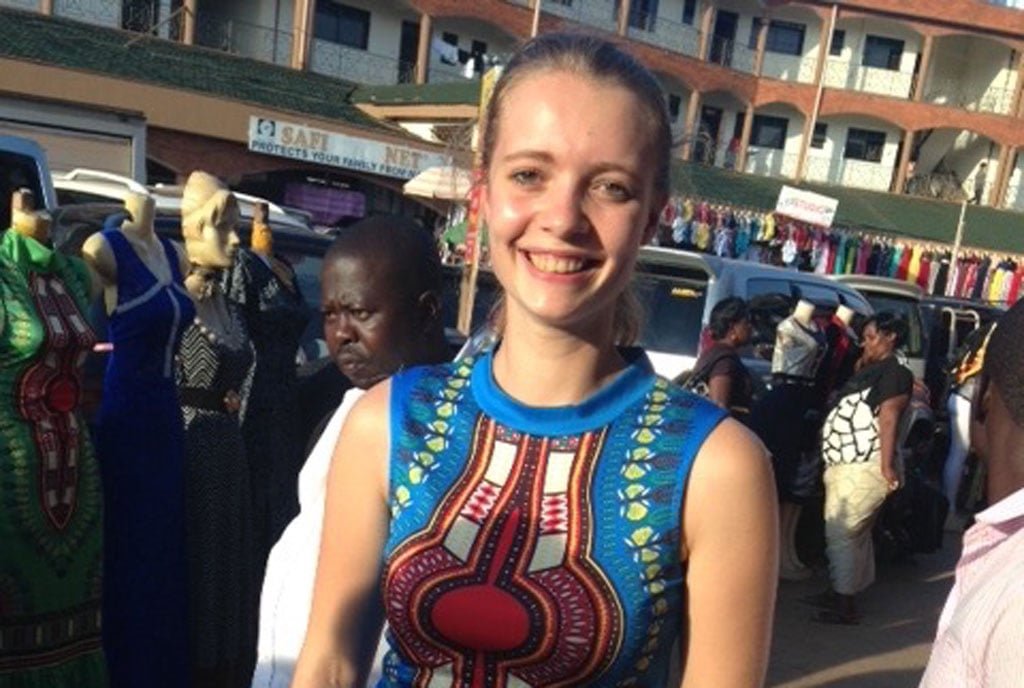
However, the initial few days were quite stressful for Sophia, as the group traveled long distances without getting proper rest.
Sophia needed a good night’s sleep because she had been battling bipolar disorder since her teenage years. Any change to her schedule or overstimulation could trigger a manic episode.
The first signs that something was going on with Sophia happened on October 26th, 2015, when the group arrived at Kidepo Valley National Park. They rented two cottages at the camp that day and planned to rest a bit before continuing their journey toward Murchison Falls National Park.
In the evening, Sophia’s behavior became unusual. She tried to jump out of a moving vehicle and also attempted to start fires within the borders of the camp. Her friends remembered she was smoking and playing music very loudly.
Other campers alerted a park tourism official in charge of the area, who advised Michael Kijjambu to take Sophia to the nearest hospital in Gulu. However, the guide ignored him, and the group continued their ride to the next stop the following morning.
After a full day of travel, the group arrived at Murchison Falls National Park on October 28th, 2015. The national park is located in north-western Uganda, and it’s best known for the Murchison Falls, where the Nile tumbles 141 feet before flowing into Lake Albert.
That day, Sophia called her mother from a boat on the Nile, expressing her excitement. A group of American tourists who met Sophia that day recalled that she was acting normally, taking photos of the waterfall and gushing about the beautiful nature around her.
But as hours ticked by, Sophia began to experience that familiar feeling of a potential manic episode.
Sophia’s friends agreed to return to Kampala as soon as possible, so that she could be with her mother. They chose not to share this decision with Sophia, as she might want to continue the tour.
The guide agreed to cut the tour short but decided they should all rest at the Uganda Wildlife Authority Student Center at Paraa. This location wasn’t typically visited by foreign tourists as it offered only the basic amenities, such as sparsely furnished rooms and shared bathrooms.
In the afternoon, Sophia exhibited noticeable moon swings, but her friends did their best to keep the atmosphere as calm as possible. Around 6:00 PM, Sophia said she needed to use the restroom and walked toward the outbuildings of the student center.
The search
When her friends realized quite a bit of time had passed, they hurried to the restroom to check if Sophia needed help. However, she was nowhere to be found. Worried she might have been attacked by an animal, the two students searched the nearby area, calling out for Sophia.
Soon, the staff members joined the search, and rangers from the Uganda Wildlife Authority were called in.
Around 9:00 PM, Sophia’s friends contacted her mother, Marije, informing her that Sophia had gone missing nearly three hours earlier. Without hesitation, Marije headed straight to Murchison Falls National Park.
More volunteers soon joined in on the search, but finding any trace of Sophia was nearly impossible in the low-light conditions. On the morning of October 29th, searchers continued along the nearby path that led to the banks of the Nile.
According to those familiar with the area, a tourist visiting the park for the first time would have difficulties finding this particular trail, especially in the evening.
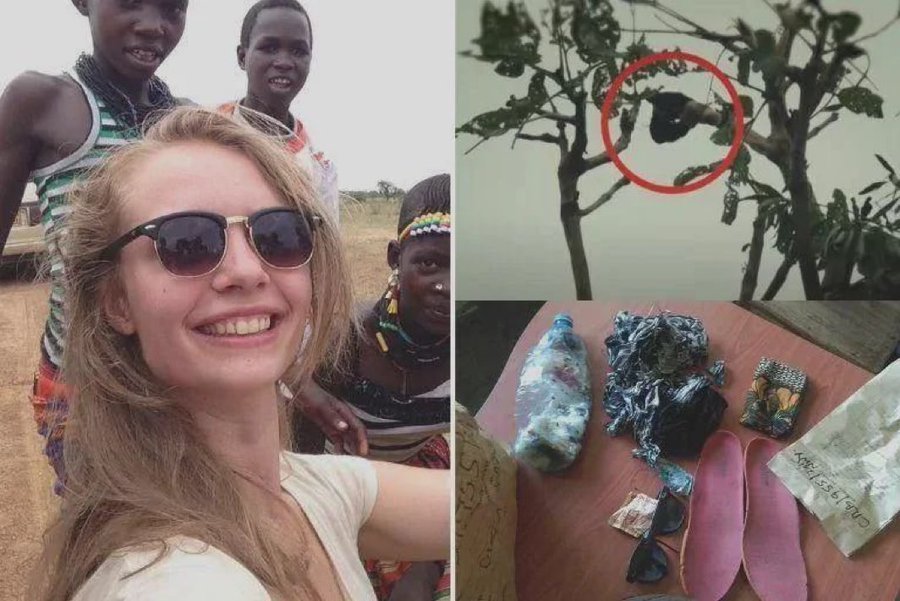
Park rangers scanned the shore from the boats, and a helicopter flew over the park. Shockingly, the first trace of Sophia was found near the river. A plastic water bottle belonging to her was discovered on the shore. She was seen with it a few hours before the disappearance.
On October 30th, searchers found more items belonging to Sophia in the same area as the plastic bottle. Those included sunglasses, a single boot, and a coin purse Sophia had purchased as a souvenir.
Pieces of Sophia’s torn trousers were draped across branches and foliage, suggesting the light material had been cut into strips. But the most disturbing discovery was Sophia’s underwear, which was found hanging high in a tree.
After Marije informed the Dutch embassy of the disappearance, the staff quickly volunteered to assist. On November 4th, Dutch police officers arrived at the national park and conducted a two-day drone scan of the area, but found no trace of the missing girl.
Despite the absence of blood or human remains, the official theory was that Sophia had wandered away from the camp and might have been attacked by a wild animal on her way to the Nile.
Authorities completely disregarded the torn fabric strips, some of which were tied around the branches, as well as the location of Sophia’s underwear.
Investigators also explored the possibility that Sophia might have taken her own life, but there was no evidence to support this theory. The local media barely reported on the story, and soon the case went cold. Nevertheless, Sophia’s mother persisted in her efforts to shed light on this mysterious case.
The criticism
From the moment Marije, Sophia’s mom, arrived at the camp, she noticed the lack of urgency. Since no one knew for certain when or where Sophia had disappeared, the entire area should’ve been marked off with police tape.
Instead, visitors and staff were coming and going as they pleased, trampling over what could potentially be a crime scene.
Marije hoped that the authorities would be more forthcoming about the progress of the search, but they provided only vague answers.
Furthermore, they immediately zeroed in on the possibility of an animal attack without considering that a person or persons might have been involved in her daughter’s disappearance.
The manner in which Sophia’s belongings were found suggested that the scene had been staged. The way in which her trousers were ripped apart didn’t match a typical animal attack.
If an animal had been involved, there should’ve been a trail of blood somewhere in the vicinity. Additionally, an animal wouldn’t leave someone’s underwear on a tall tree branch.
In early 2016, Sophia’s family created the Find Sophia website to help raise awareness about her mysterious disappearance.
When Marije realized the Ugandan authorities weren’t going to help in finding her daughter, she took it upon herself to travel to Uganda a few times a year. She spoke to the locals and searched the river banks on her own.
While talking to the UWA rangers, Marije learned that on the night of her daughter’s disappearance, a large number of the Ugandan People’s Defense Force soldiers had been staying at a nearby camp. Those soldiers weren’t questioned during the investigation.
In 2020, Marije met with the Ugandan president, Yoweri Museveni, who agreed to launch a reinvestigation into Sophia’s case. However, the global pandemic derailed the plans until 2022, when the case was finally reopened.
The DNA testing
The Dutch law enforcement conducted basic DNA testing on items found by the river just to confirm they belonged to Sophia. The Ugandan authorities sat on the evidence for years before finally agreeing to analyze it for DNA traces. Even if testing was performed, the results were never shared publicly or with Sophia’s family.
Once again, Marije stepped up by hiring a private laboratory in the United States to run DNA tests on each piece of evidence. They had DNA profiles for all 28 individuals who potentially handled the evidence upon the discovery. After excluding all of them, a single unknown male DNA profile emerged.
This DNA was found on the underwear, pieces of trousers, a boot, and the recovered insoles.
The presence of such a significant amount of DNA suggests that an unknown person was involved in Sophia Koetsier’s disappearance and potential murder. Someone with a good knowledge of the national park could have hidden her body following the crime.
The tour guide on trial
Following the reopening of the case, Ugandan authorities took a closer look at the tour guide in charge of the round trip, Michael Kijjambu. It was quickly revealed that he didn’t have the tour guide certification back in 2015, meaning he shouldn’t have been driving the tourists across the country.
Furthermore, the guide completely ignored warning signs regarding Sophia’s mental state and refused to listen to a tourism officer who advised him to take the young woman to a hospital.
In June 2025, Michael Kijjambu appeared before a judge at Buganda Road Chief Magistrate’s Court, with Marije Slijkerman testifying as a witness. In September, the court failed to reach a verdict, and the case was abandoned.
It has now been over a decade since Sophia Koetsier vanished mysteriously. The status of the reopened investigation is currently unknown, but her family continues to fight for justice regardless.
Sources
https://www.politie.nl/en/missing/missing-adults/2015/oktober/16053681

Leave a comment